
What is an Andon system?

Août 28, 2025

🕐 Temps de lecture : 4 minutes

In industry, Andon is a lean method for responding more effectively to production incidents. Here’s how it works, with concrete results.

Like many lean concepts and methods, Andon was popularized as part of the Toyota Production System last century. The idea? To enable production-related problems to be detected, reported and resolved more quickly and efficiently.

Andon operating principles

Andon is essentially a system of visual and/or audible alerts:

  • an operator, a quality controller, or even a machine, depending on the type of Andon implemented, signals a problem,
  • a leader or member of a support department, informed of the problem, intervenes to resolve it.

Digital Andon: a more efficient and flexible alert system

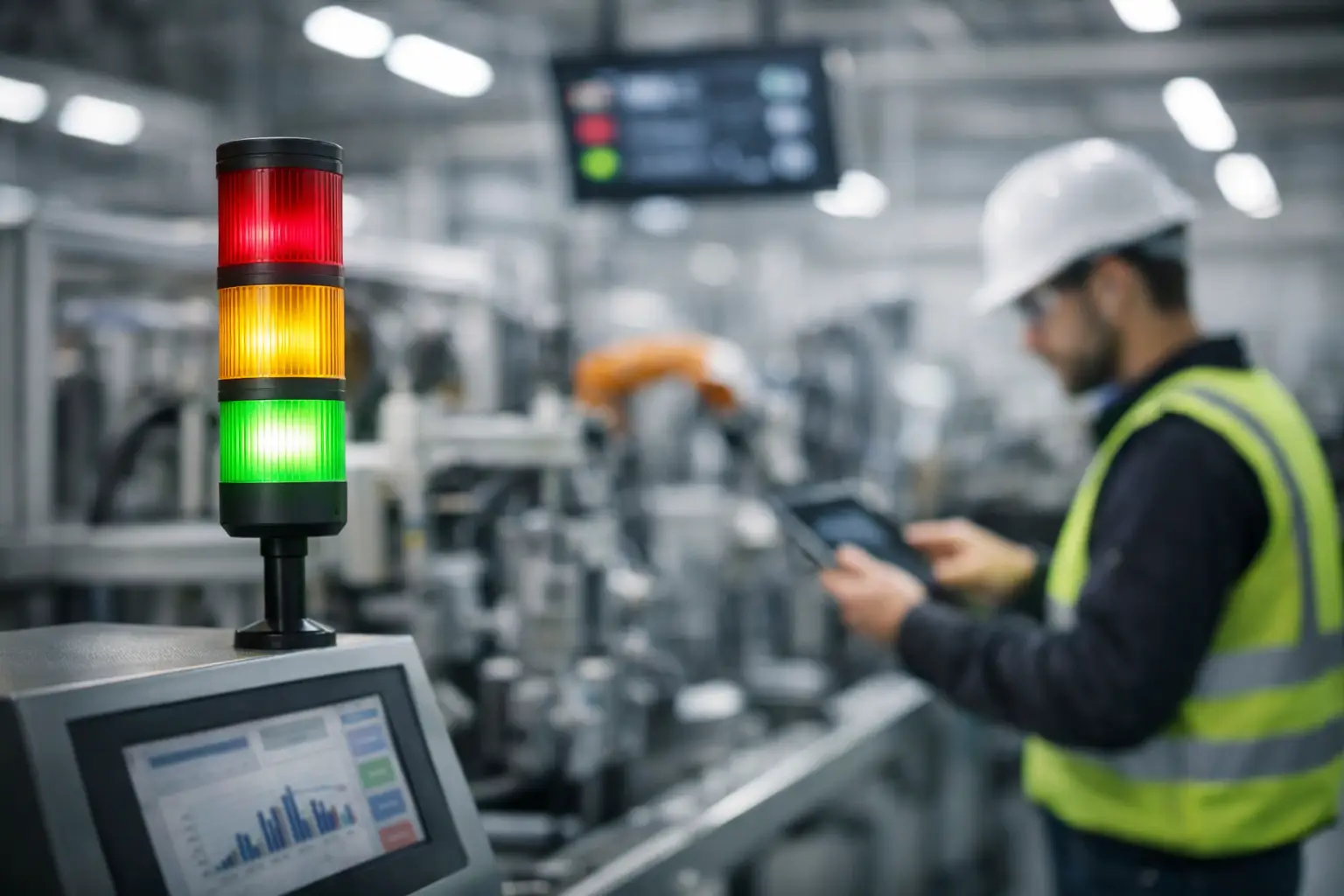
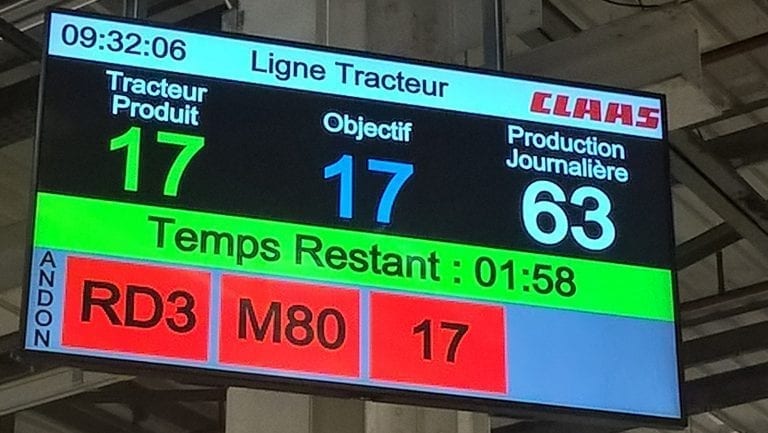
Traditionally, this alert was signaled by a light system (hence the Japanese term Andon, which translates as “light to go towards”) and sometimes sound alerts. It most often took the form of light columns placed on workstations.
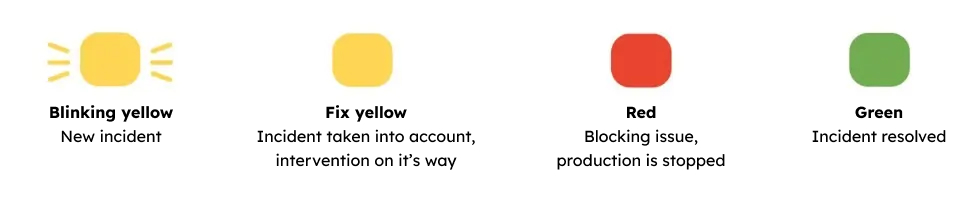
andon explication

Thanks to new technologies, the digital Andon (or e-Andon) allows :

  • warn leaders and support departments more effectively: large screens on the shop floor, e-mail and SMS alerts ensure that the relevant manager is alerted more quickly and directly, especially when he or she is not physically present on the shop floor (in a meeting, for example),
  • adapt the layout of “alerters” more easily when the production plan changes: a radio remote control or an operator’s tablet can be moved more easily than the ropes and light columns of yesteryear,
  • simplify the transition to a continuous improvement approach: incidents are “coded” electronically, and thus entered into a database which enables them to be analyzed efficiently, and corrective action plans to be launched.

The digital Andon, because it enables information to be circulated and displayed in real time, is therefore one of the ingredients of just-in-time.
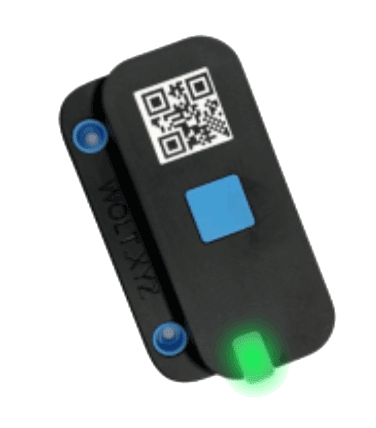
Télécommande radio pour les alertes simples
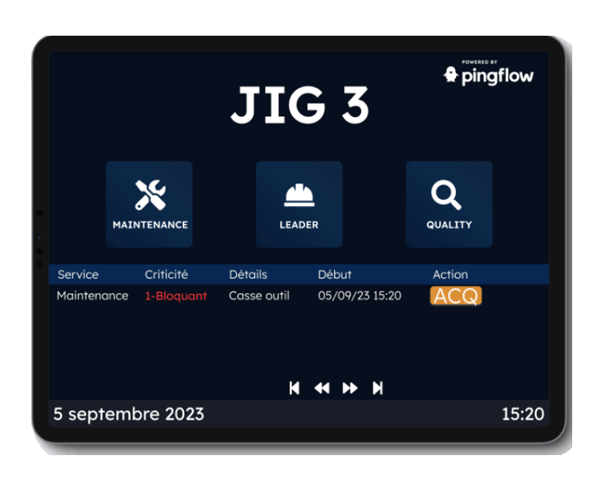
tablette pour codifier les appels et saisir des informations

Radio remote control for simple alerts, tablet to code calls and enter information: a solution for every problem.

What are the phases of the Andon process?

A typical Andon process can be broken down into 4 phases:

  1. Detection: either human (Andon operator, Andon supply) or automatic (Andon machine), this is when the Andon alert is triggered.
  2. Processing: in this phase, the incident is qualified according to its seriousness, and assigned to the appropriate person (the manager in charge, the maintenance team, etc.).
  3. Visibility: this is where the rules for communicating the alert are set, either directly to those in charge (SMS, e-mail) and/or collectively (posted on the shop floor).
  4. Improvement: once the incident has been resolved, it is entered into a database which will be used by the teams in charge of proactively resolving the most frequent or most blocking incidents in the future.
DETECTIONPROCESSINGVISIBILITYAMELIORATION
etapes Andon 1 detectionetapes Andon 2 traitementetapes Andon 3 visbiliteetapes Andon 4 amelioration
Detect anomalies as soon as they occurPrioritize
Critical > Urgent > Blocking > Annoying


Assign
By e-mail, SMS, display


Escalate
According to urgency, availability: level 1 > 2 > 3
Individual level
Manager (SMS/e-mail)Operator (console, tablet, video)

Team level
Screens, light columns, buzzers
Historization and traceability
Duration
Pareto
Frequency
Actionsetc.

Continuous improvement

What are the main features of an e-Andon system?

To reach its full potential, an Andon digital system must include :

  • Andon call devices, triggered by operators (buttons, tablets
) or by automation (when a threshold is exceeded or an inconsistent indicator triggers an alert),
  • an escalation process, to alert the first supervisor to be alerted, then follow up if there is no response, then move on to the next level
,
  • non-alert functionalities essential for monitoring: display of takt time and production indicators (target, achieved, deviation), to move from a simple problem detection/resolution system to a production unit management aid (via a flowboard, for example),
  • and finally, data collection and analysis functions, to measure the frequency of incidents by cause, type, zone, severity
 and work to reduce them through continuous improvement.

What are the different types of Andon?

There are two main types of Andon:

  • simple” Andons, which focus on detecting and resolving localized problems on production lines,
  • advanced” Andons, which often combine several types of simple Andon, or combine Andon for alerting with visual production management systems (flowboard) or team animation systems (AIC).

What are the advantages of implementing Andon?

Why do people generally decide to implement an Andon system? It’s usually for one (or more) of these 4 reasons:

  1. Rigid organization: lack of reactivity, quality monitoring not proactive enough,
  2. An opaque organization: anomalies and production indicators are not sufficiently visible, which complicates decision-making and forces us to over-consume support resources,
  3. Poor monitoring: management is in permanent “fire-fighting” mode to ensure that production rates are respected,
  4. Insufficient traceability: incidents are not documented, preventing any continuous improvement process.

Responsiveness: incidents resolved twice as fast

The first benefit of implementing an Andon system is the acceleration of incident resolution. Time is saved at every stage of the process:

  • alerts are issued more quickly, as each workstation or machine is equipped with a call device, with clear criteria,
  • the incident is dealt with more quickly by the leader or the support department, thanks to the multiplication of means of contact (SMS, email, digital display in the workshop and offices),
  • the unavailability of the first “contact” in the Andon alert process is rapidlycounterbalanced by escalation.

The result? Our customers see incident resolution times cut by a factor of 2 on average, and line downtime significantly reduced.

Visibility: better informed, more autonomous teams, more effective decision-making

Thanks to e-andon, everyone involved is kept informed in real time:

  • the operator concerned knows precisely whether his call has been taken into account, and whether resolution is underway,
  • his colleagues on the same production line know the nature of the incident, if it is blocking,
  • their leader, maintenance, quality control, internal logistics
 are alerted, and know who is assigned to resolving the incident.

So everyone can make the right decisions at the right time, with the certainty of having the right information. The benefits? They are both human and organizational:

  • less stress, with teams passing the buck in the event of an incident,
  • real cohesion around clear objectives and indicators,
  • real optimization of human resources, especially in management and support services.

Operational excellence: an OEE up by 5 to 15%.

As a logical consequence of the previous 2 points, Andon digital considerably improves the productivity of a production unit, by :

  • making the supply chain more reliable (less overstocking, fewer supply disruptions),
  • minimizing the cost of non-quality,
  • speeding up operations on the production line, and “sticking” more closely to takt time.

What exactly are the productivity gains? In the field, we measure an increase in our customers’ OEE (Overall Equipment Effectiveness) of between 5% (e-Andon “simple”) and 15% (e-Andon “piloting”).

Very quick to deploy (less than a month for a simple version), e-Andon systems offer an almost immediate ROI (visible in less than 6 months), and incremental!

Continuous improvement: Andon accelerates digital transformation

The final major benefit of Andon digital is the range of possibilities it offers for continuously improving your operations. Why is this?

and they form the “bedrock” of your future digital transformation projects: with an operational e-Andon, you have the information you need to deploy data-driven production management(flowboard), offer your teams visual AIC management screens in real time, etc.

It generates a wealth of data, incident after incident, providing a much clearer picture of whether your production lines are operating normally, inadequately or efficiently, as well as therecurring causes of problems that need to be corrected,

These data can be used tofeed and prioritize corrective action plans that will minimize or eliminate these problems in the future.

To go further


Explore all our articles to discover real-life cases and get practical advice for digitizing your industrial site.
Illustration d'un pingouin qui dit "celui-ci est particuliÚrement intéressant !"
Exemples de KPI Tree Industriel

KPI Tree industriel : comment structurer vos indicateurs pour piloter réellement la performance

📊 Un constat frĂ©quent en industrie Votre usine suit peut-ĂȘtre 80 KPI. Pourtant, si l'on vous demande lesquels expliquent rĂ©ellement une baisse du TRS, la rĂ©ponse prendra sans doute plusieurs minutes. Ce n'est pas un problĂšme de donnĂ©es. C'est un...
Opérateur montrant un écran ERP ou MES à quelqu'un du bureau

Guide intégration ERP MES terrain : réussir la connexion entre les systÚmes et les équipes

Sur le terrain, l'échec d'une intégration ERP-MES ne vient presque jamais du connecteur. Il apparaßt généralement plusieurs semaines aprÚs la mise en service, lorsqu'un responsable de production découvre que les données remontent correctement dans...
Image illustrant le suivi de production automatisé chez FBA

Fiabiliser et optimiser le pilotage : comment automatiser votre suivi de production ?

ChapitrageSystĂšme manuel vs systĂšme automatisĂ© : qu’est-ce qu’on y gagne ?Le suivi de l’activitĂ© : plus robuste, plus prĂ©cisLe monitoring de la production : vraiment temps rĂ©elLa performance : gain de temps Ă  tous les niveauxChez FBA, des balises...
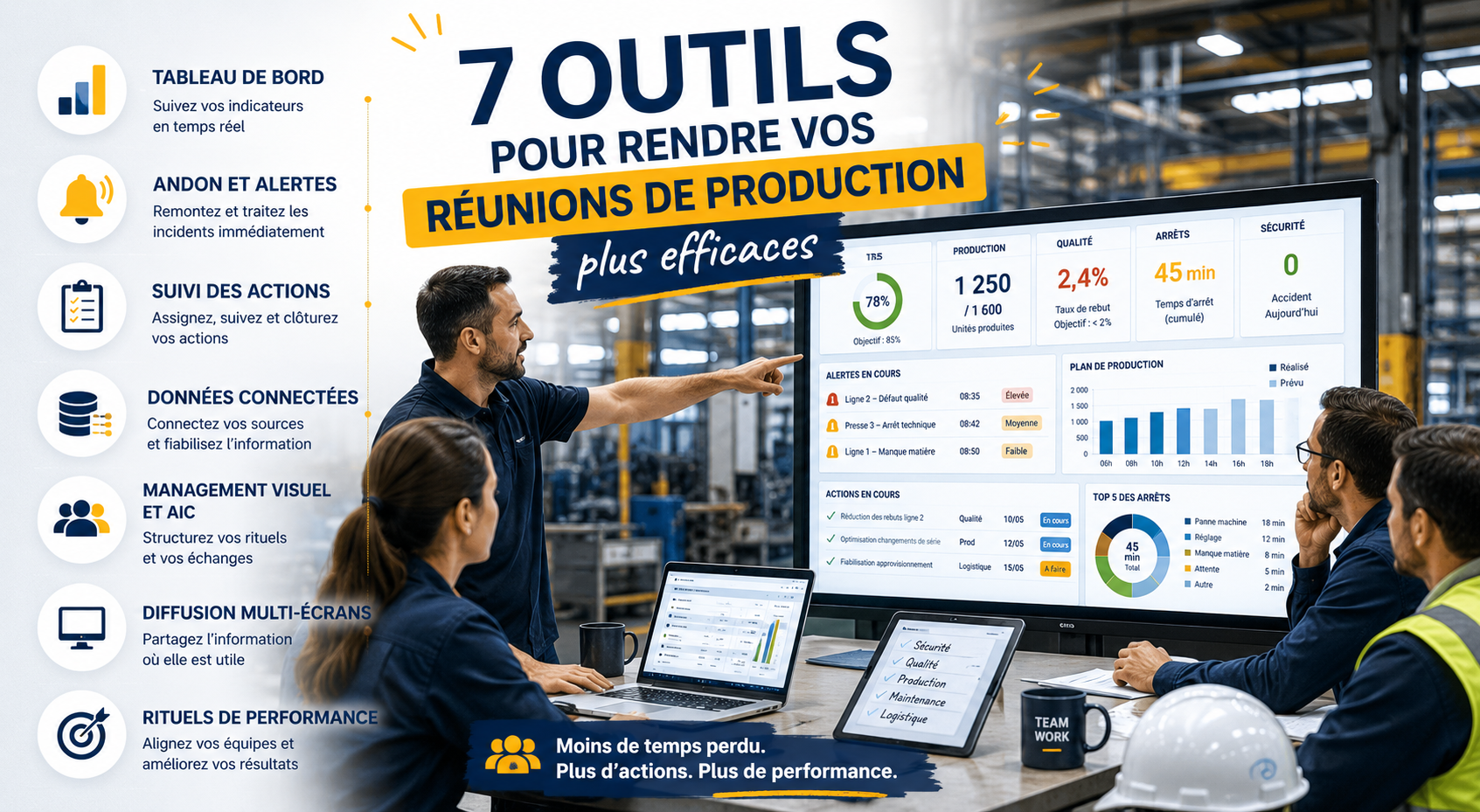
Réunion de production industrielle avec tableau de bord en temps réel et outils de management visuel digital. L'image présente les principaux outils pour réunions de production efficaces : Andon, suivi des actions, données connectées, AIC, diffusion multi-écrans et pilotage de la performance en usine.

7 outils pour rendre vos réunions de production réellement efficaces

ChapitragePourquoi les rĂ©unions de production dĂ©raillent encoreLes 7 outilsQuels indicateurs suivre pendant une rĂ©union de production ?Les erreurs les plus frĂ©quentesCe qu'une bonne rĂ©union doit produire À 9 h 02, la rĂ©union de production a dĂ©jĂ ...
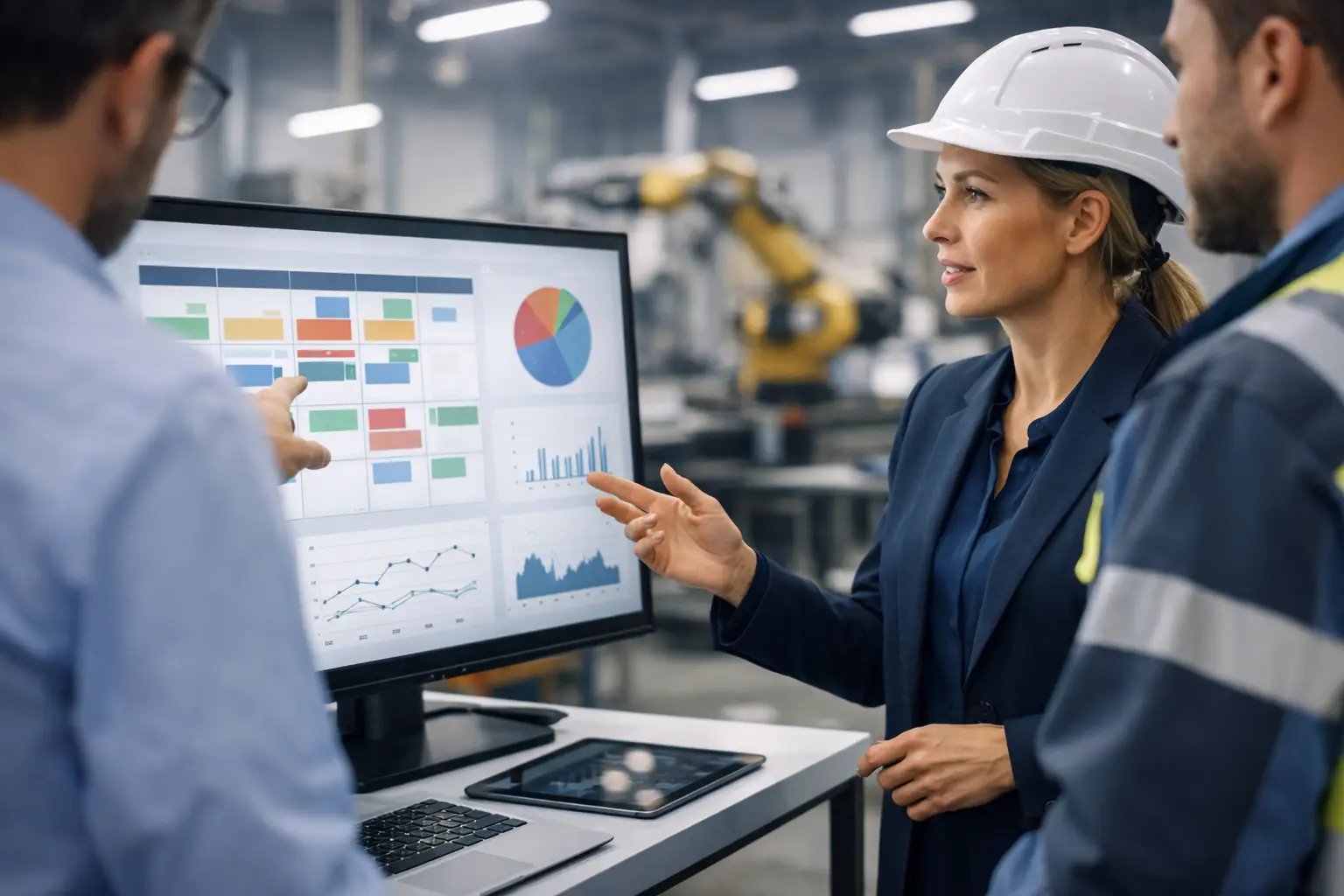
Personnes devant un écran montrant un logiciel de pilotage visuel

Logiciel de pilotage visuel en usine : comment choisir une solution utile au terrain

À 8h05, le point d’équipe commence.Le tableau blanc n’est pas Ă  jour, les chiffres de la veille circulent encore sur un fichier Excel, et l’alerte qualitĂ© de nuit n’a pas Ă©tĂ© remontĂ©e au bon niveau. RĂ©sultat : les Ă©quipes passent les dix premiĂšres...
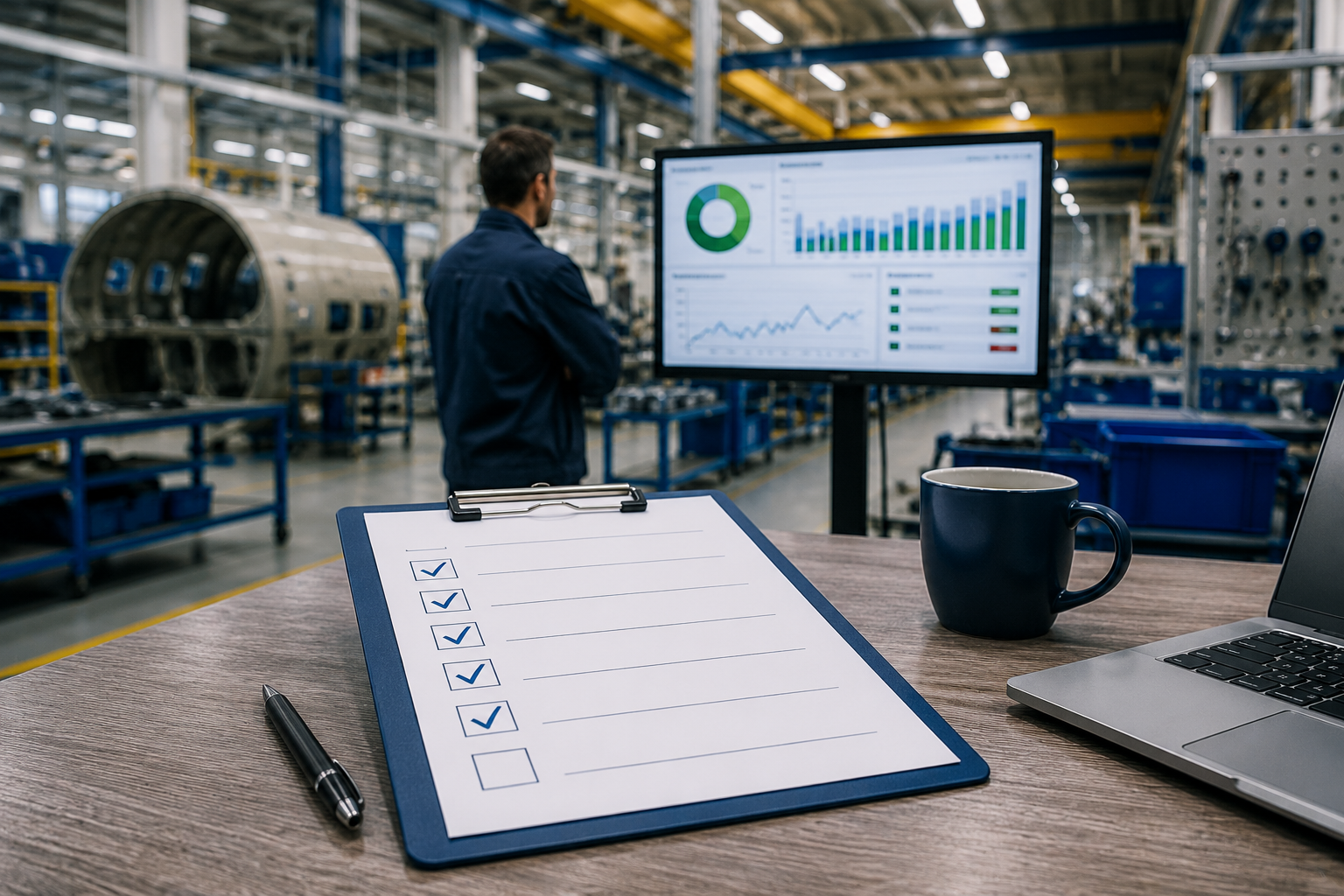
Aperçu d'une checklist dans devant un écran digital au milieu d'un shopfloor en préparation pour le label aero excellence

Comment préparer une évaluation Aero Excellence quand on est une PME industrielle

Quand on parle d’Aero Excellence, beaucoup de PME aĂ©ronautiques ont exactement la mĂȘme rĂ©action : “C’est surtout un sujet pour Airbus, Safran ou les trĂšs gros sites industriels.” Et honnĂȘtement, cette impression est comprĂ©hensible. Quand on...
Image d'illustration d'un homme dans un atelier à cÎté d'un avion. Il regard un écran affichant différent KPI connectés à la production pour le label aero excellence

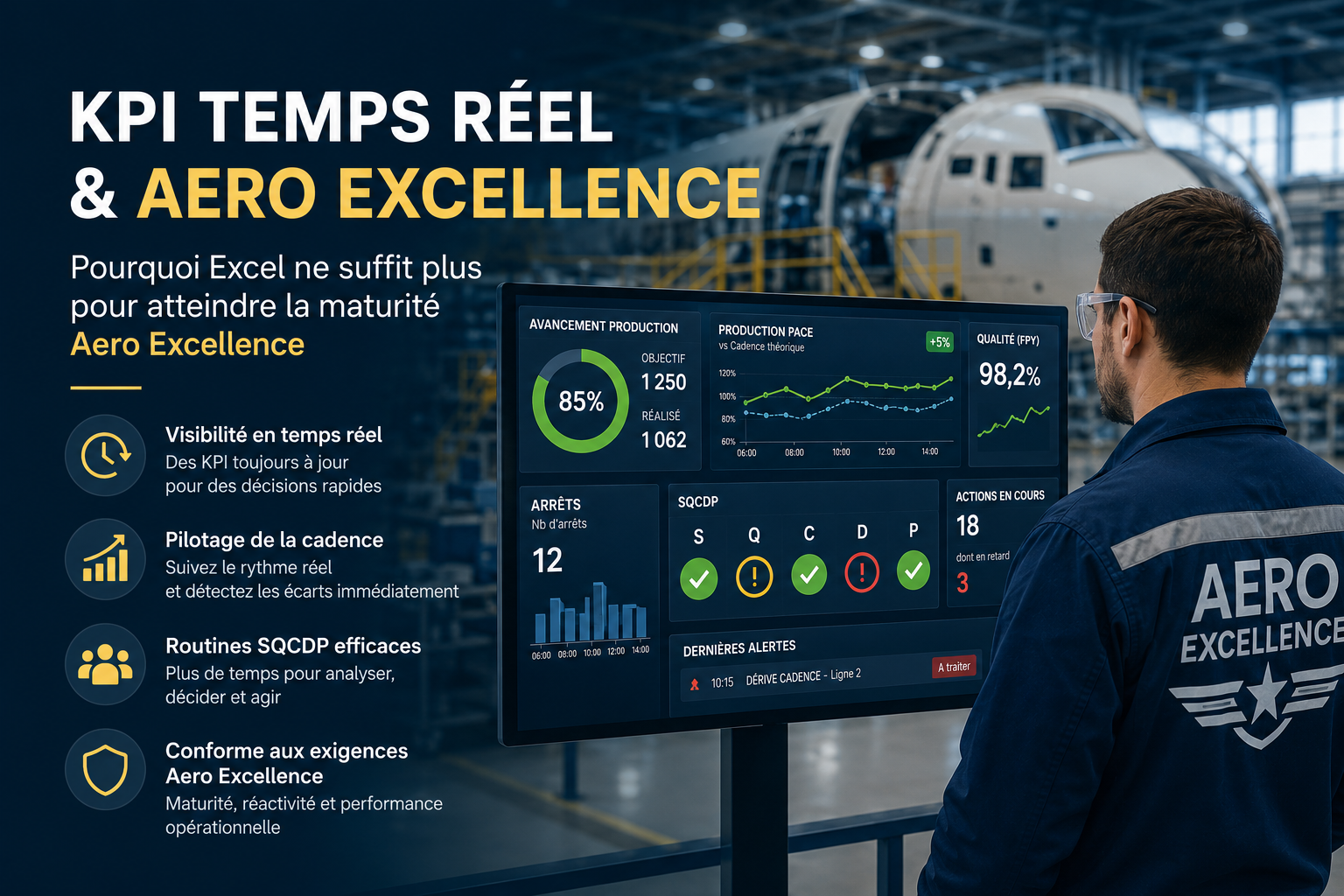
Pourquoi Excel ne suffit plus pour Aero Excellence

ChapitrageAero Excellence pousse les industriels vers une logique de pilotage temps rĂ©elLe vrai problĂšme d’Excel dans un contexte Aero ExcellenceLe vrai sujet : KPI de reporting ou KPI de pilotage ?Pourquoi le “Production Pace Management” devient...
Une femme dans un atelier devant un avion avec une tablette Ă  la main suivant les andons

Comment rĂ©duire les temps de rĂ©action pour Aero Excellence avec l’Andon

ChapitragePourquoi Aero Excellence pousse les industriels vers une logique de rĂ©action rapidePourquoi les systĂšmes Andon traditionnels atteignent leurs limitesL’e-Andon transforme l’incident en donnĂ©e pilotableLe MTTR devient un indicateur clĂ© de...
Images illustrant le lien entre SQCDP et Aero Excellence

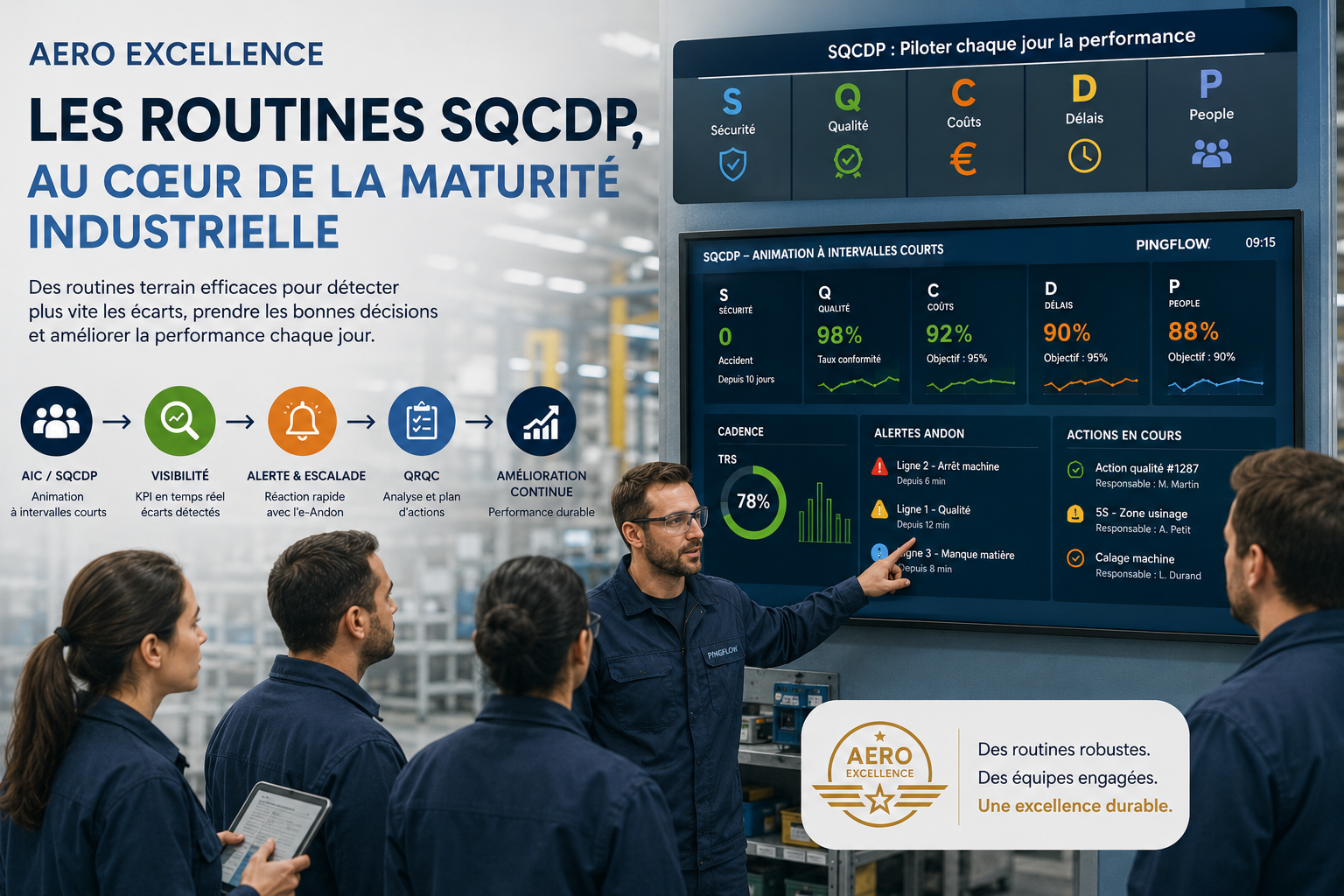
Pourquoi les routines SQCDP sont devenues centrales dans Aero Excellence

ChapitragePourquoi Aero Excellence accorde autant d’importance aux routines terrainLe vrai problùme des SQCDP papierPourquoi les routines digitales changent complùtement la dynamiqueLe lien direct entre SQCDP et Aero ExcellencePourquoi l’AIC...
header label aeroexcellence

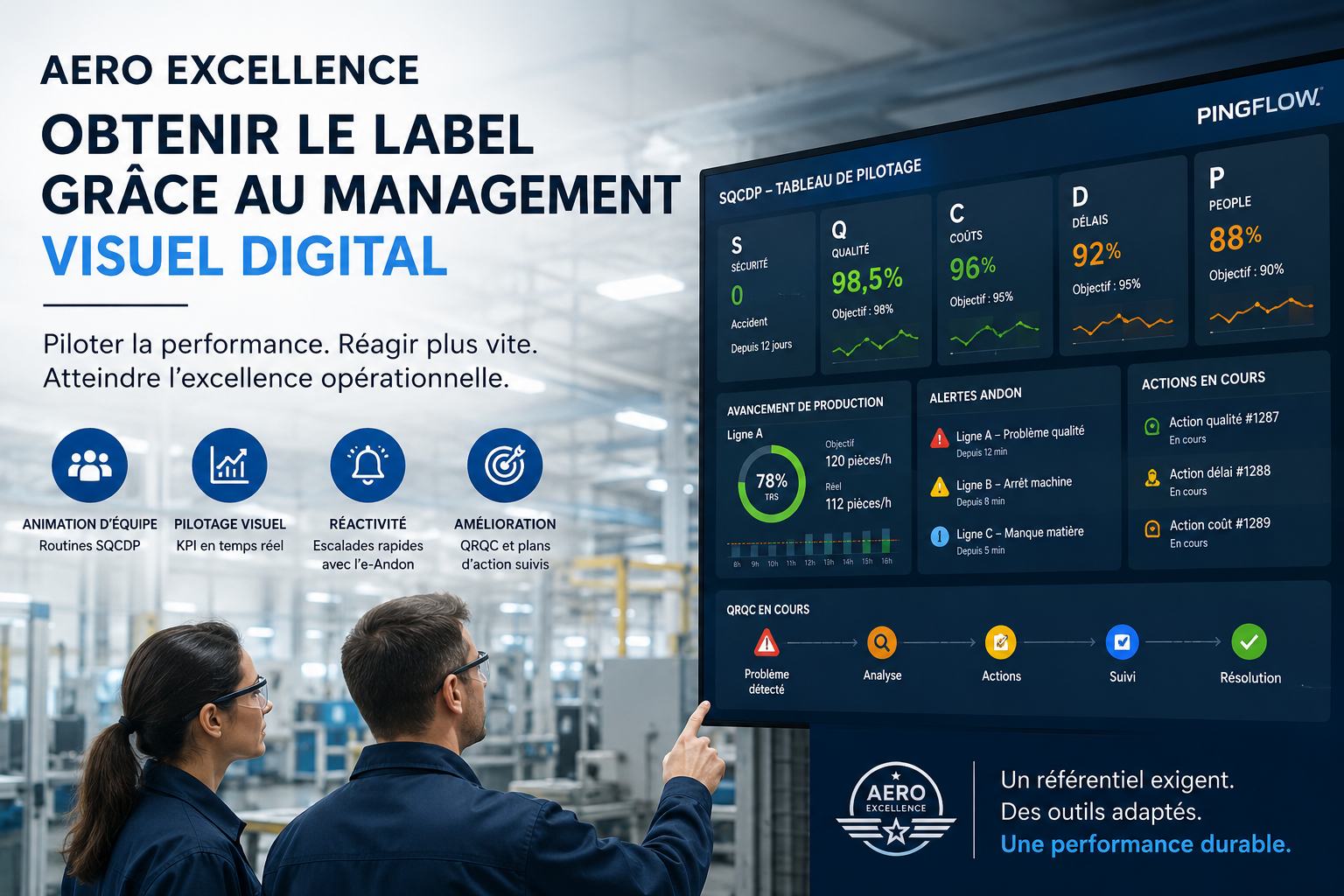
Comment obtenir le label Aero Excellence grĂące au management visuel digital

ChapitrageAero Excellence : un référentiel pensé pour le terrainCe que les évaluateurs regardent vraiment dans les ateliersPourquoi Excel devient un frein à la maturité industrielleLe management visuel digital change complÚtement la logiqueComment...
Photo d'un avant aprÚs Pingflow avec à gauche beaucoup de papier et tableau blanc et à droite un écran connecté de management visuel digital

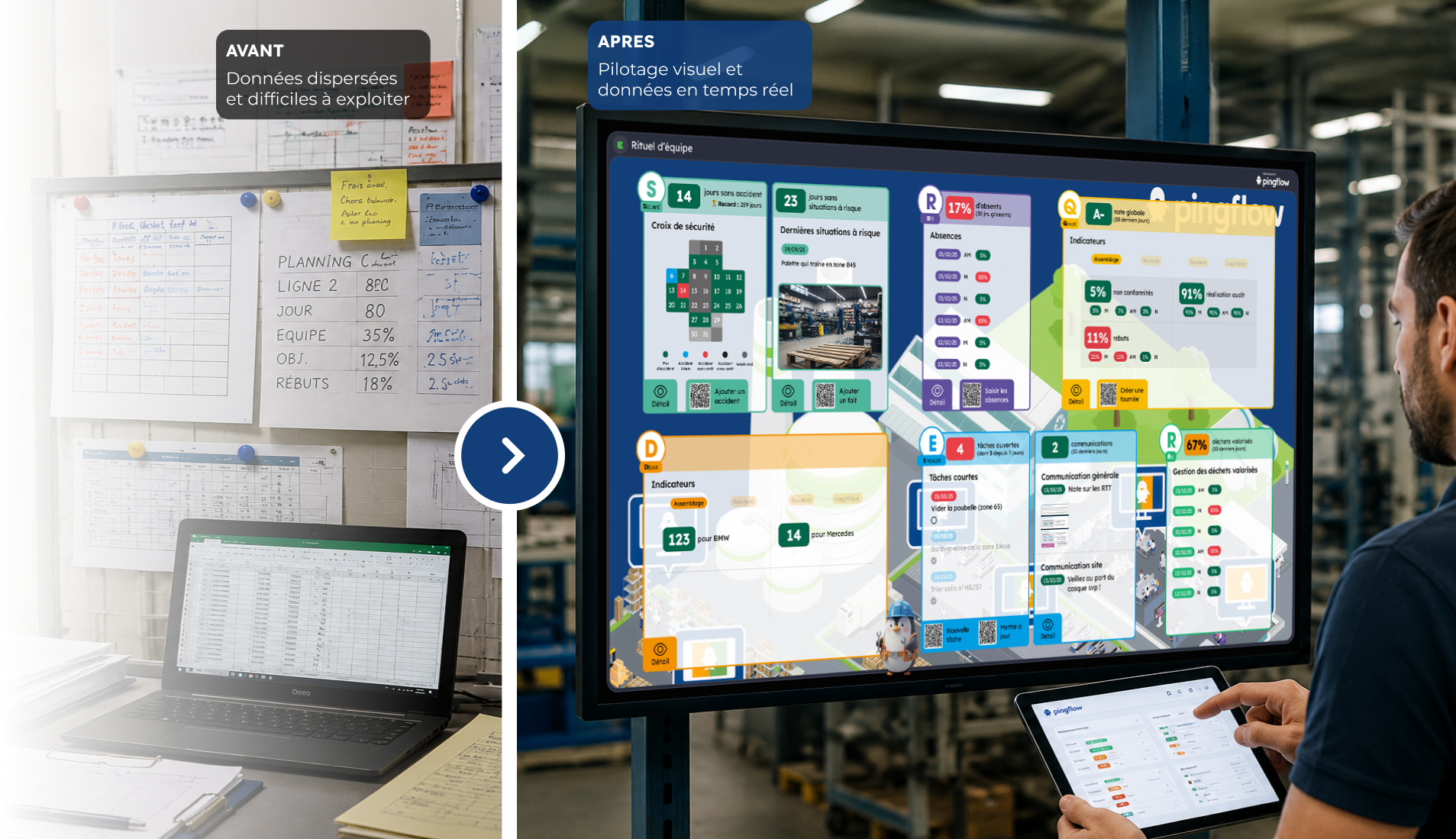
Remplacer Excel en production : pourquoi les ateliers passent au pilotage en temps réel

ChapitrageLe coĂ»t cachĂ© d’Excel en atelierPourquoi Excel pose-t-il problĂšme en production industrielle ?Par quoi remplacer Excel en usine ?Excel peut-il ĂȘtre utilisĂ© pour le suivi de production ?Quelle diffĂ©rence entre Excel et un logiciel de...
Homme de dos dans une usine tenant une tablette avec du suivi d'activité en temps réel

Le suivi d’activitĂ© en temps rĂ©el en usine

ChapitragePourquoi le suivi d’activitĂ© en temps rĂ©el devient un standardCe que le temps rĂ©el change vraiment sur le shopfloorLe management visuel comme colonne vertĂ©brale du temps rĂ©elQuels indicateurs suivre en temps rĂ©el, et lesquels...
SystÚme andon connecté en usine

SystÚme Andon connecté : utile ou décisif ?

Table des matiĂšresL’essentiel Ă  retenir👉 À lire aussi :Quelle diffĂ©rence entre un Andon classique et un Andon connectĂ© ?Un Andon connectĂ© amĂ©liore-t-il le TRS ?Peut-on connecter un systĂšme Andon Ă  un ERP ou un MES ?L’Andon connectĂ© est-il utile en...
Before/after Bils Deroo management visuel

Pourquoi passer au management visuel 4.0 ?

Pourquoi passer au management visuel 4.0 ? Pour gagner en réactivité, fiabilité et alignement terrain avec des données utiles en temps réel.

Pierre Jolimont et Benoit Hutin chez Toyotomi Europe

Comment Toyotomi a rĂ©duit ses arrĂȘts de production de 20 % grĂące Ă  l’Andon digital

Passer du pilotage en J+1 au temps réel : un enjeu clé pour les industriels Il y a deux façons de piloter une usine : la premiÚre consiste à constater, la seconde consiste à voir. Dans le premier cas, on analyse les résultats en fin de poste, en...
Photo d'une animation d'équipe à l'aide du management visuel digital Pingflow chez le Groupe Bils-Deroo

Groupe Bils-Deroo : structurer un projet de management visuel digital en logistique

Dans un secteur logistique sous forte pression concurrentielle, oĂč les marges sont faibles et la complexitĂ© Ă©levĂ©e, le Groupe Bils-Deroo a fait un choix stratĂ©gique : structurer son pilotage grĂące au management visuel digital. Groupe Bils-Deroo...
Photo des partenaires lors du lancement de Mirai

Mirai : un projet collaboratif pour rĂ©inventer le management visuel avec l’andon IA

Mirai s’inscrit dans le cadre du programme Industrie du Futur portĂ© par la RĂ©gion Hauts-de-France. Le projet a Ă©tĂ© sĂ©lectionnĂ© pour son ambition : rendre les outils de pilotage industriel plus accessibles, plus intelligents et plus directement...
personnes effectuant une tournée de terrain

Management visuel et lean : les 4 piliers du management visuel 4.0

Dans un contexte industriel oĂč la performance, l’agilitĂ© et la rĂ©activitĂ© sont devenues incontournables, le management visuel de la performance s’impose comme l’un des leviers les plus puissants du lean management. Il permet de donner du sens aux...
rituel sqcdp chez metso

Metso : des wallboards digitaux pour “aligner” l’ensemble de sa production

De la vente aux expĂ©ditions, en passant par l’usinage et l’assemblage : en impliquant l’ensemble de ses Ă©quipes dans l’amĂ©lioration des rituels d’animation (AIC), l’usine de Metso de MĂącon a considĂ©rablement fluidifiĂ© la visibilitĂ© des...
ecran andon pingflow chez claas

e-Andon : comment mettre en place un systùme d’alerte digitale dans mon usine ?

À l’origine simple systĂšme d’alerte visuelle et sonore dĂ©clenchĂ©e par un opĂ©rateur pour signaler un incident ou un dysfonctionnement, l’Andon a beaucoup Ă©voluĂ© ces derniĂšres annĂ©es, avec notamment des innovations concernant les dispositifs...
Modal webinaire Pingflow